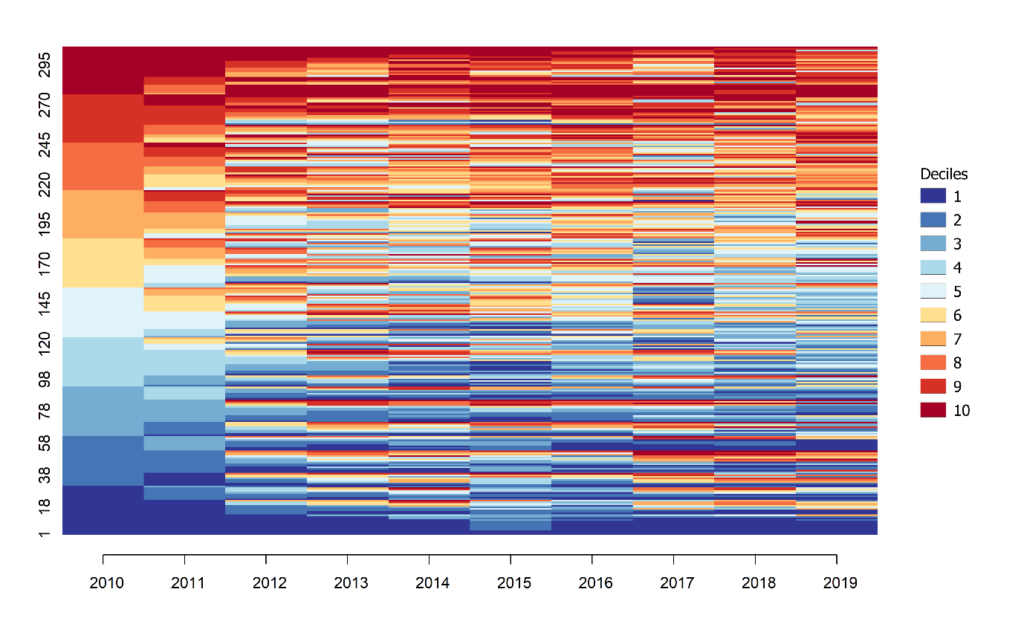
This analysis co-authored with Paul Bridgen (University of Southampton) and published in Energy Research and Social Science, explores the spatio-temporal dynamics of fuel poverty estimates and energy efficiency policy targeting in England since 2010.
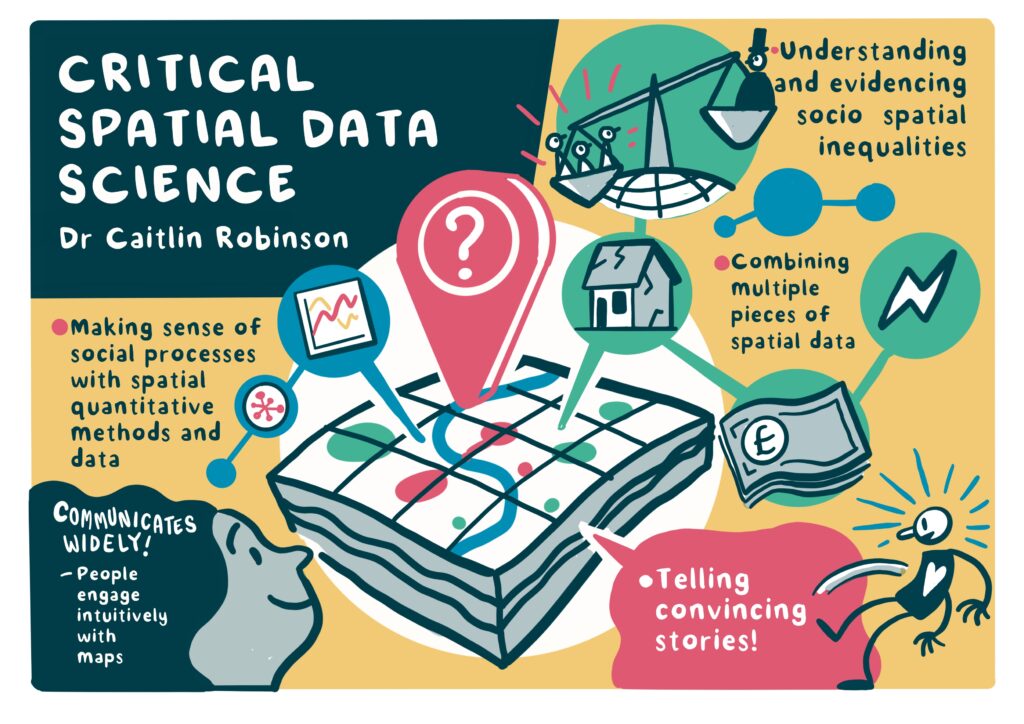
This ‘how to’ guide outlines the Critical Spatial Data Science research method, authored by Caitlin Robinson in collaboration with illustrator Jack Brougham. Critical Spatial Data Science (or Geographic Data Science) analyses quantitative data with some form of spatial identifier – for example, a coordinate, a street name, or a census block – to generate new knowledge.
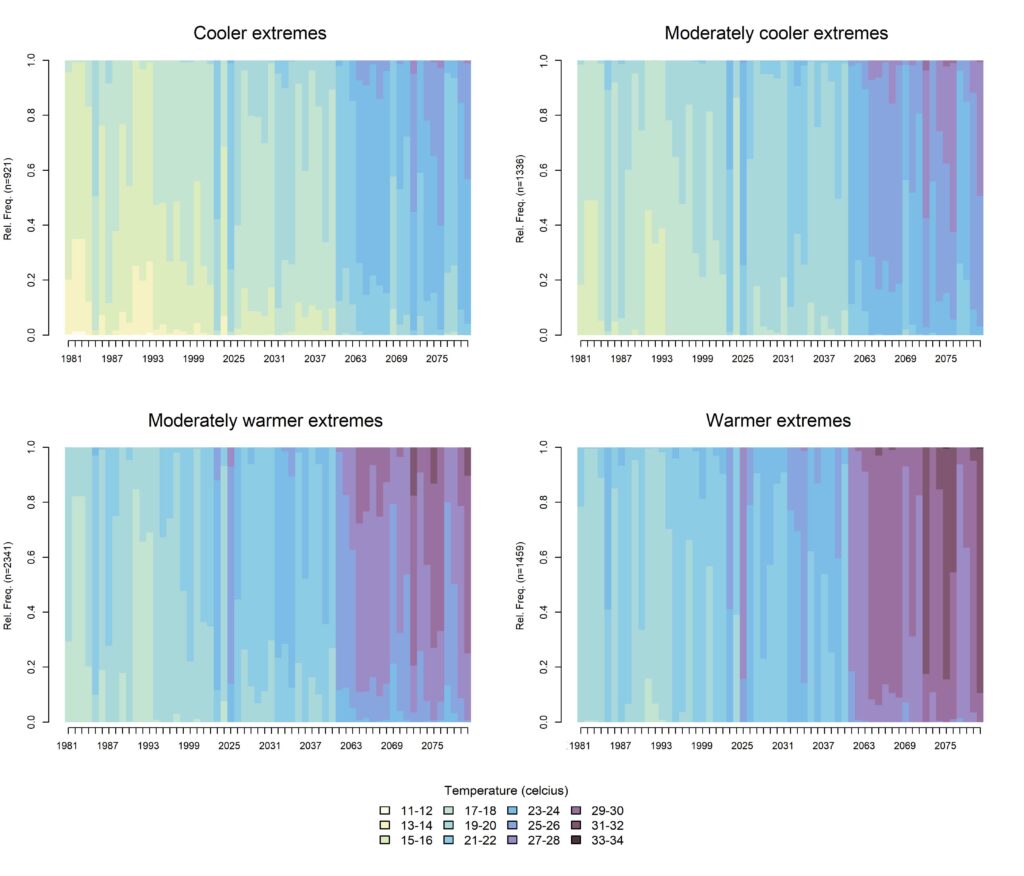
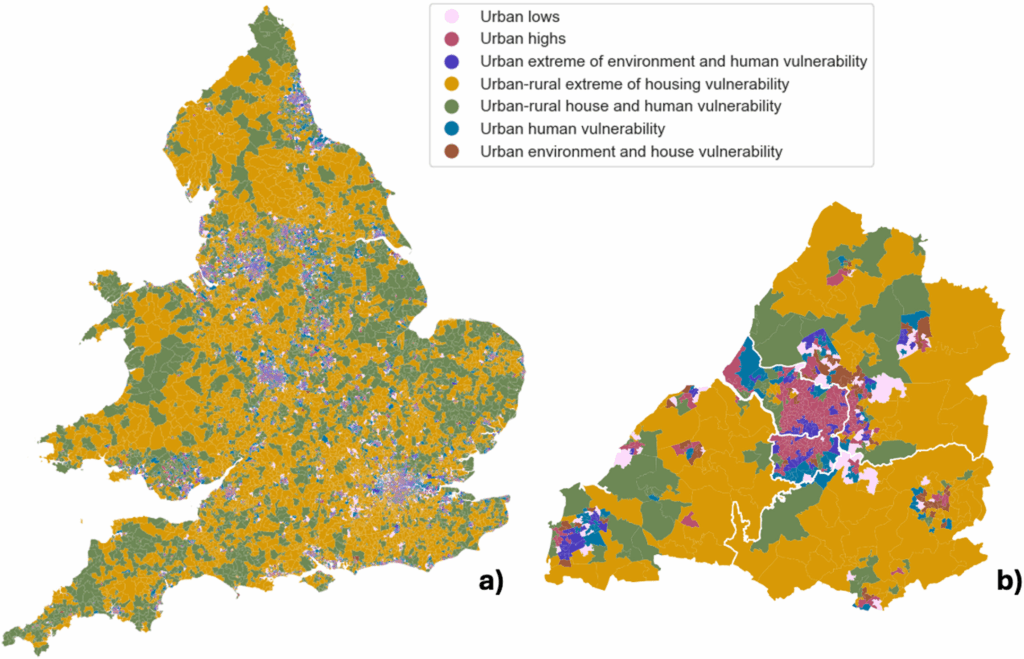
This paper, published in Transactions of the Institute of British Geographers, conceptualises and analyses localised heat-housing trajectories for neighbourhoods in England and Wales. It considers housing-related vulnerabilities that are likely to be reinforced, produced or remediated by extreme summer temperatures.
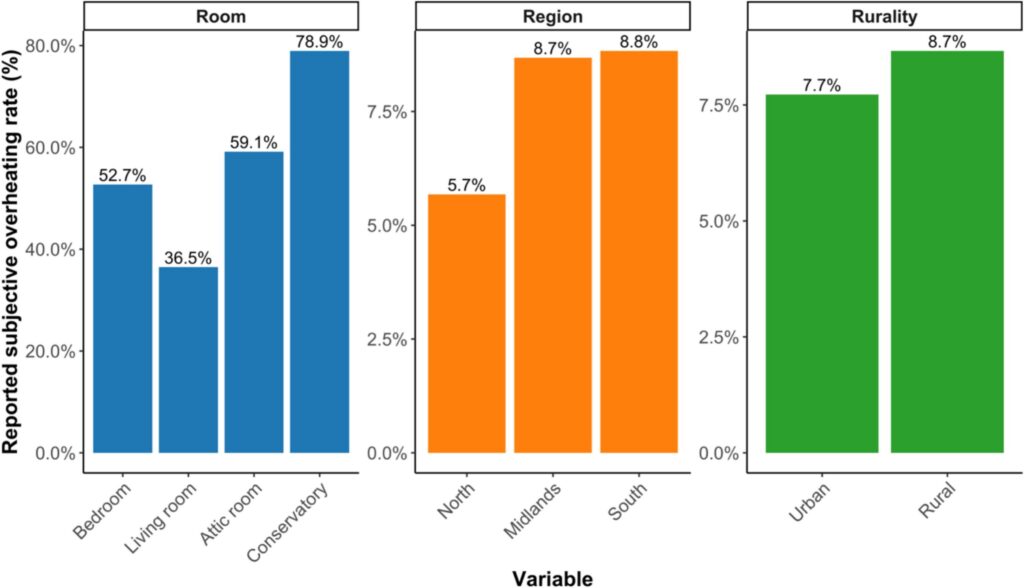
Published in Energy Research and Social Science, this paper centres understanding of how their subjective experiences of overheating vary. We analyse the largest recent sample of English dwellings, comprising 11,152 households. Methodologically, using Latent Class Analysis, four classes are derived which highlight specific housing characteristics that increase the likelihood of a household experiencing overheating.
This paper, published in Environment and Planning B, aims to better understand the complex social and spatial drivers of vulnerability to poor indoor air quality. This is done by establishing a conceptual framing and building a new classification of vulnerability to indoor air pollution at the neighbourhood scale across England and Wales.
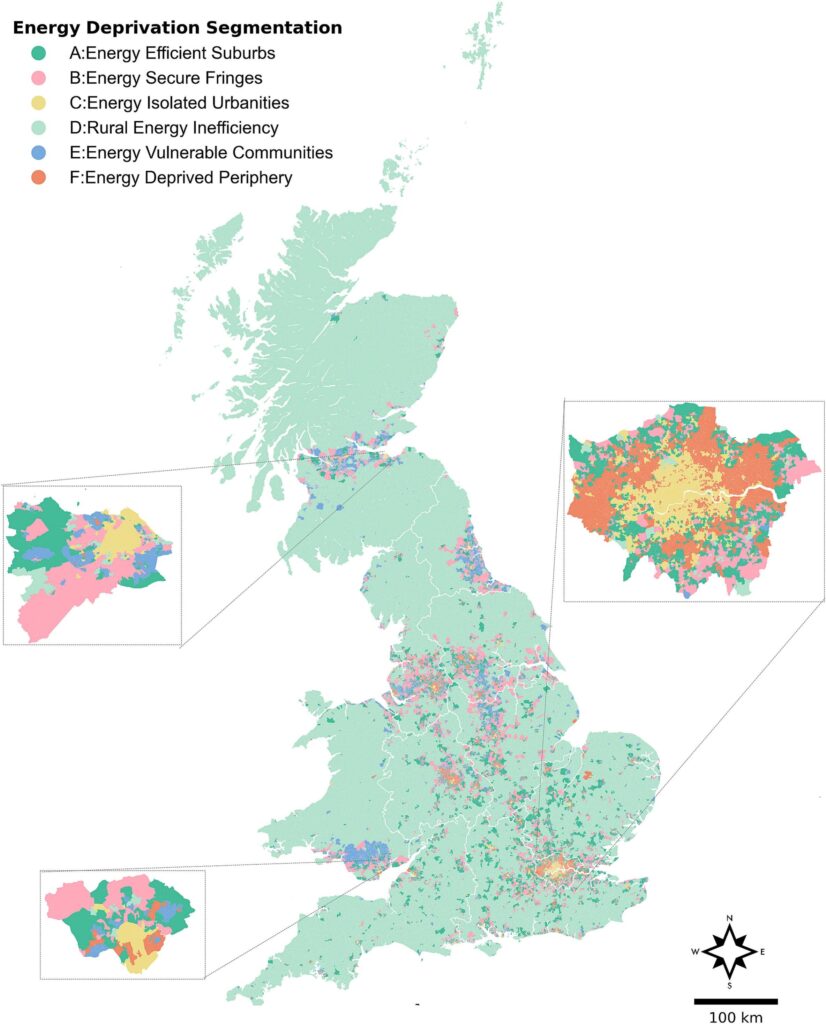
Led by Meixu Chen (University of Liverpool) this paper, published in Computers, Environments and Urban Systems, provides a thorough Energy Deprivation Segmentation (EDS) for Great Britain, which aims to address the complex and varied aspects of energy poverty in different small regions. By proposing a reproducible analytical framework, we combine many data sources to provide a comprehensive segmentation that encompasses various dimensions such as energy efficiency, accessibility, demand and supply, housing conditions, and financial vulnerability. The results indicate notable disparities in energy deprivation based on social and spatial factors. We observed higher degrees of deprivation in the peripheral areas of major cities and suburbs in the northern regions of England, southern regions of Wales, and central regions of Scotland.
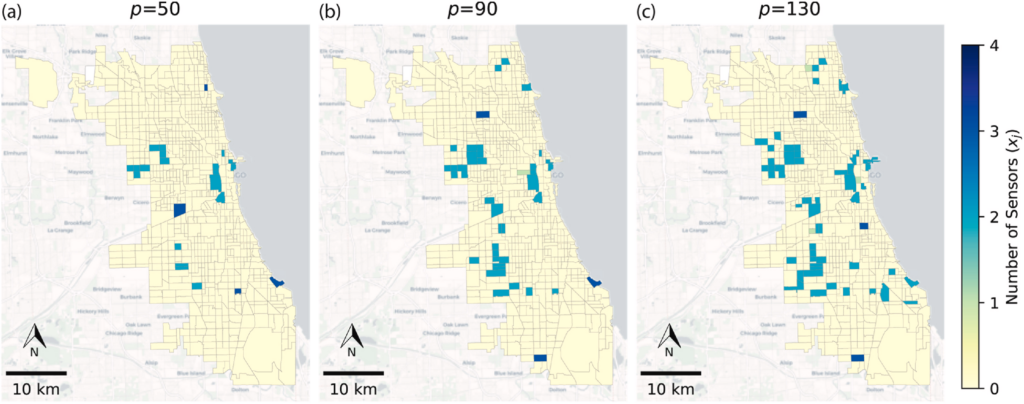
Led by Yun Lin (Center for Spatial Data Science, University of Chicago), this paper published in Applied Geography, this paper develops a new location modelling framework that integrates environmental and social justice goals for equitable air quality sensor placement. We propose a gradual covering location model to optimize sensor distribution, considering data for both environmental exposure and sociodemographic vulnerability. Our application to air quality sensing in Chicago (United States) demonstrates the effectiveness of the proposed framework, showing that sensors are suggested to distribute across high-traffic downtown areas and vulnerable communities, providing more equitable coverage compared to existing public, participatory or crowdsourced sensor networks.
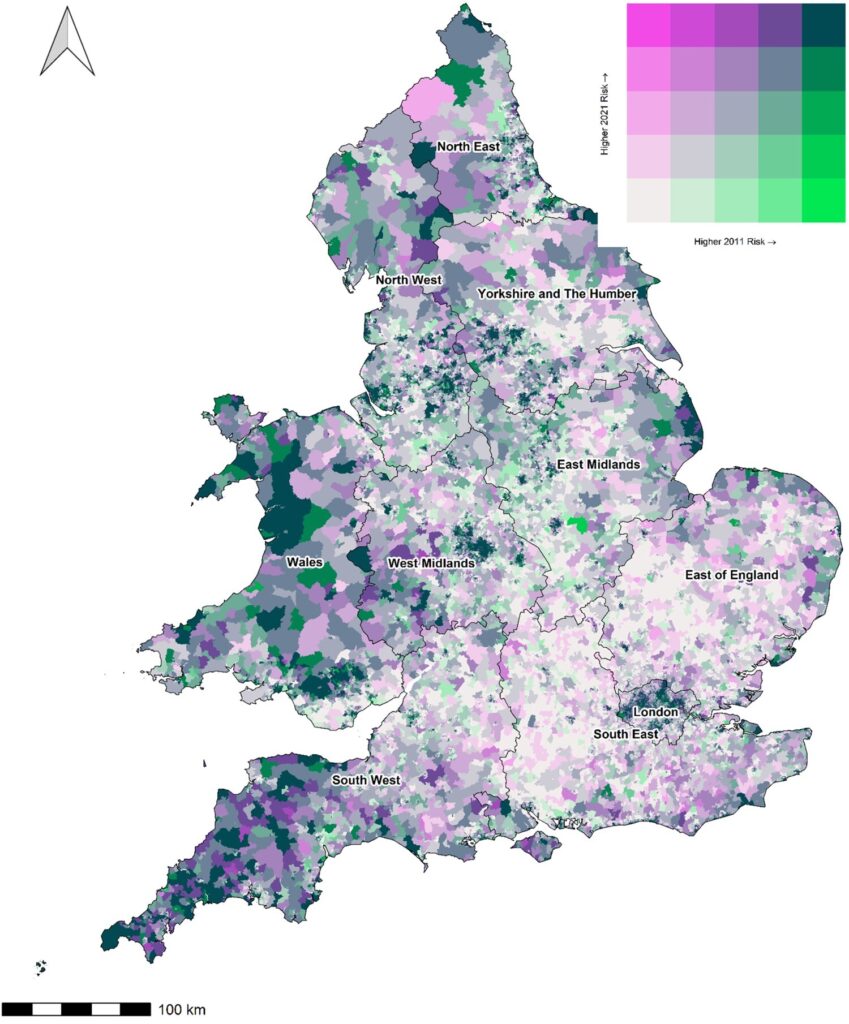
This paper, led by PhD researcher Cameron Ward (University of Liverpool), argues that understanding the temporal elements of energy vulnerability are critical as they are known to compound over time. The study, publish in Regional Studies, Regional Sciences journal, addresses the gap by constructing the first spatial energy vulnerability composite indicator for England and Wales that is temporally comparable. Utilising dwelling and socio-economic measures, we calculate energy vulnerability risk in small areas for both 2011 and 2021.