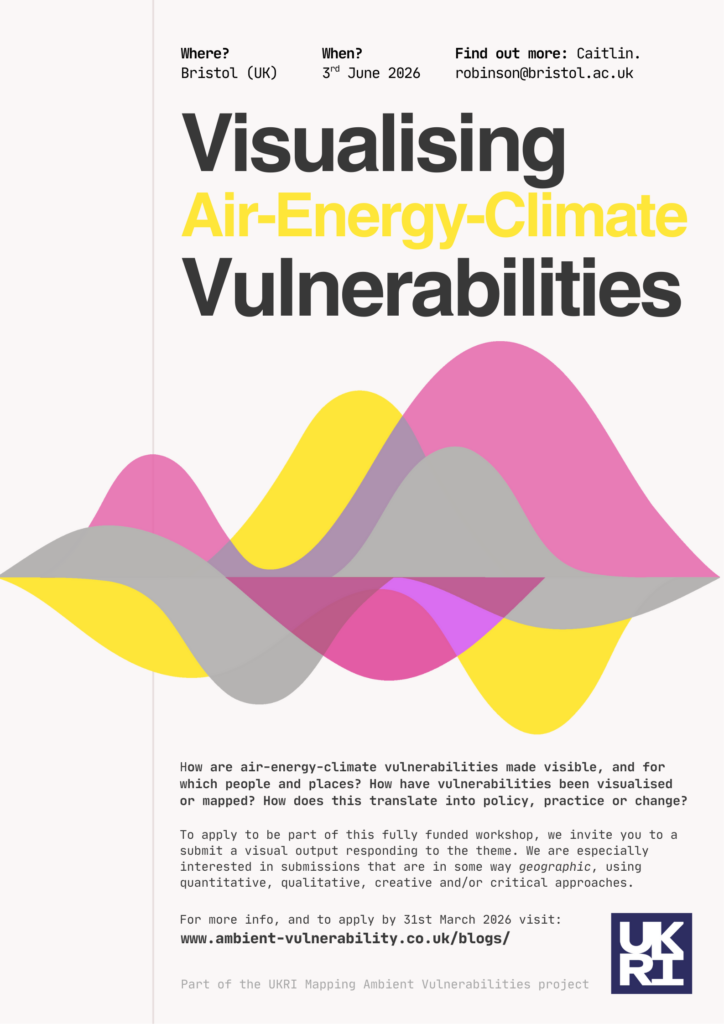
How are air-energy-climate vulnerabilities made visible, and for which people and places? How have vulnerabilities been visualised and mapped? How does this translate into policy, practice and change?
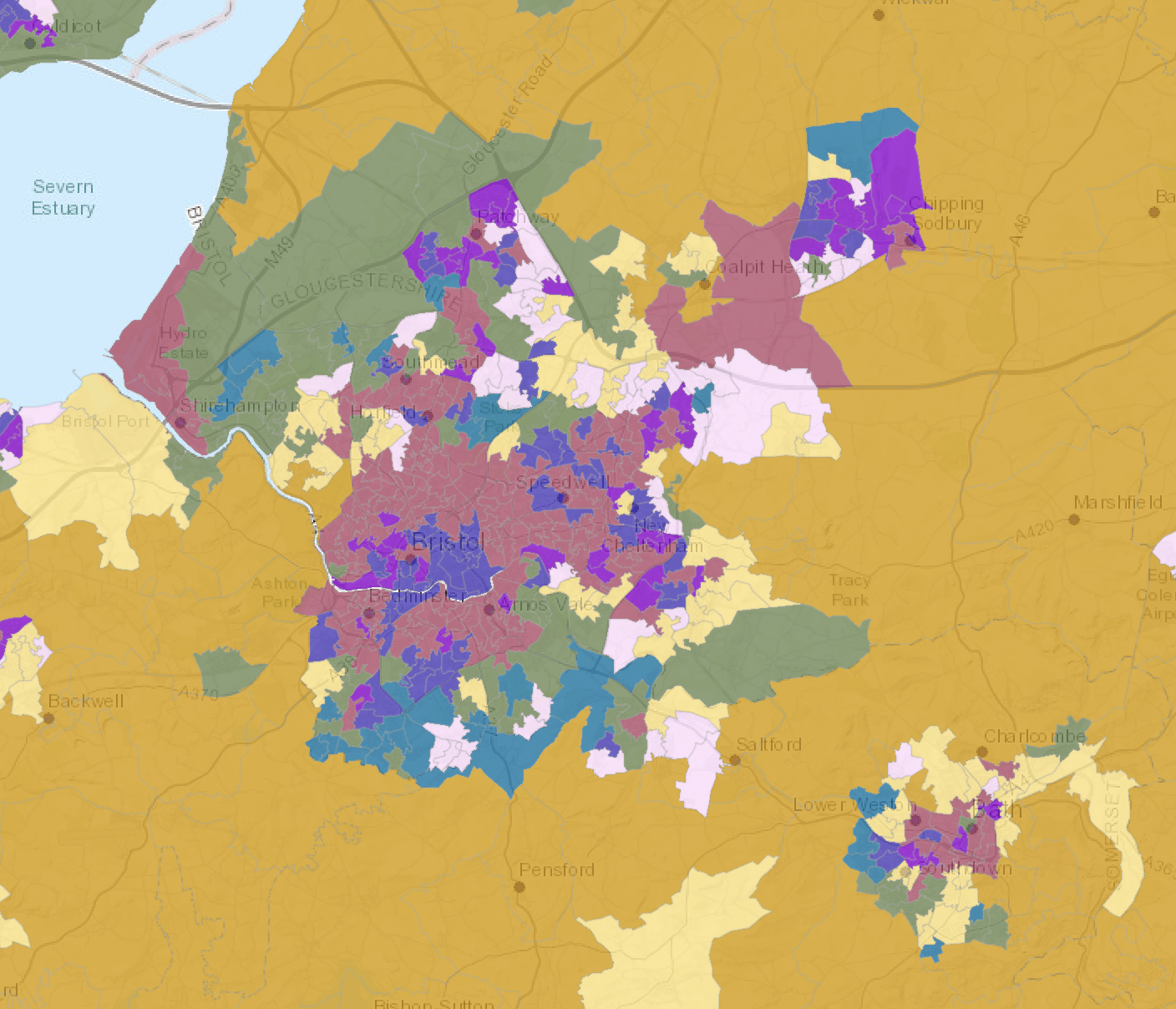
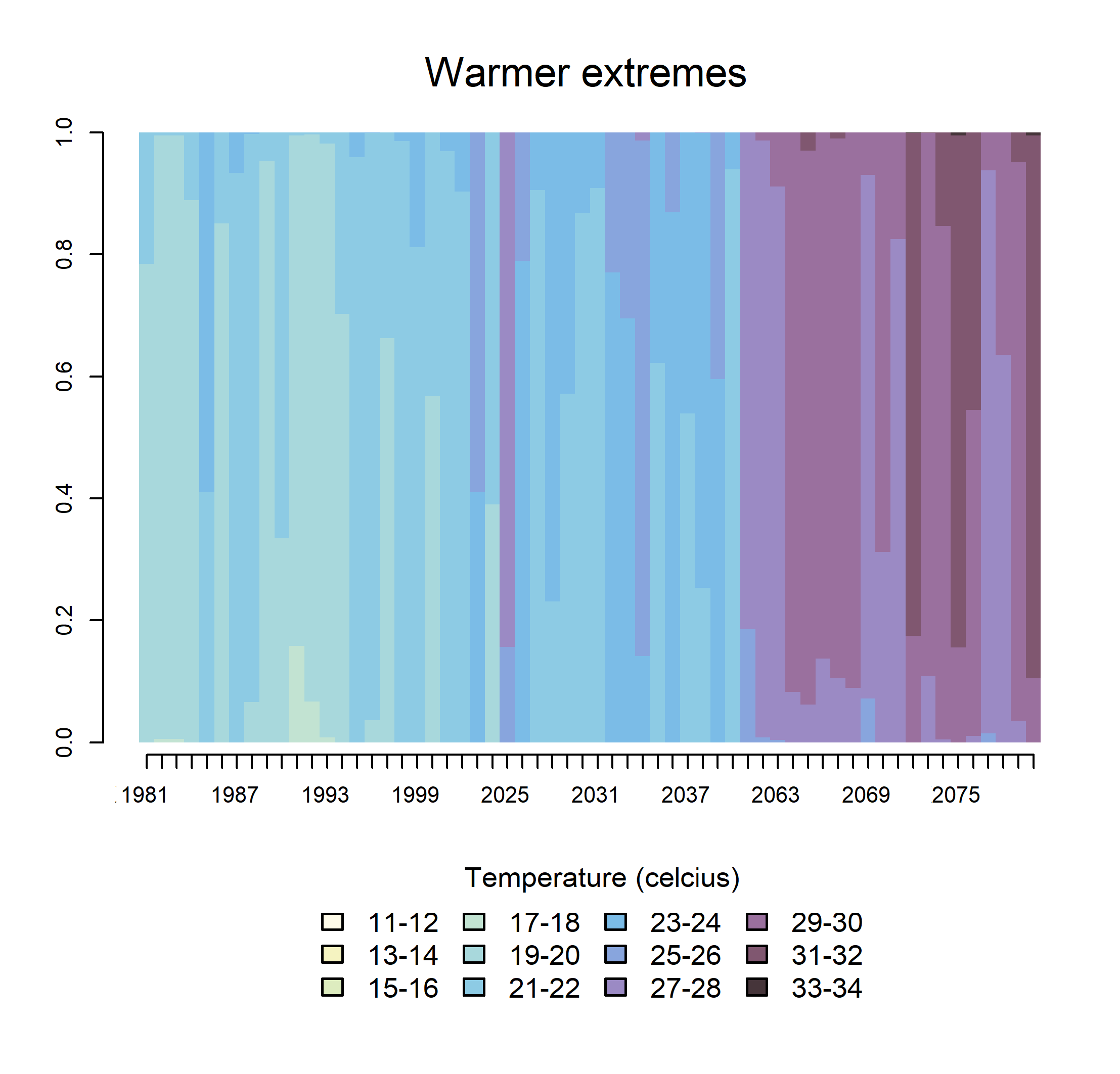
Our ambient environment envelopes different spaces unevenly, for example whether people are exposed to NO2 during their daily commute, to dangerously cold temperatures, or to mould spores in their bedrooms. Ultimately, vulnerabilities accrue such that a given person is more or less likely to be exposed to a harmful ambient environment. As a result the interplay between poor air quality, energy inequalities and climate-related heat is a pressing social justice issue.
What is the aim of the workshop? This one day workshop aims to improve our collective understanding of air, energy and climate vulnerabilities, and their uneven distribution both socially and spatially. We are especially interested in the interrelations between vulnerabilities that are often less well understood, including their cumulative impact, whether that be as people move through the city, or throughout their lifetime.
What will be workshop entail? During the workshop we will hear from a range of researchers, policymakers and practitioners, to understand the different ways in which vulnerability is conceptualised, analysed across scales, and translated into useful evidence. There will be lots of opportunity for interactivity, including a visualisation discussion session (see below) as well as roundtables where we will map out interrelations between air-energy-climate vulnerabilities. Whilst we are hosting the workshop in the United Kingdom, and therefore our policy and practitioner attendees in particular tend to specialise in this context, we would love to learn from attendees with experience across diverse national contexts.
When is the workshop? 3rd June 2026 10am – 4:30pm
How do I apply? To be considered for a place at this fully-funded workshop, we invite you to submit a visualisation (see below) responding to the workshop theme, accompanied by a short 150-word description. Applications can be submitted via Microsoft Forms. The deadline for applications is the 31st March, with successful applicants notified on the 2nd April.
What format should my visualisation be in? We are especially interested in submissions that are in some way geographic, are visually appealing and tell an interesting story, using quantitative, qualitative, creative and/or critical approaches. They don’t need to be perfectly polished or brand new, and they can have been published elsewhere, but they should give us a sense of your interests. If successful, your visualisation will be displayed during the workshop in a poster-style session to prompt discussion. It will also be used as part of a visual collection that will be published after the event (with your permission). The visualisation should be high resolution enough that it can be printed in at least A3 format. Please note, whilst your visualisation could take an alternative format (e.g. animated, hand-drawn or 3D) an appropriate image should also be made available for printing.
What will be funded? All workshops costs will be funded, as well as reasonable travel costs up to £250 for those who do not live or work in Bristol. If you anticipate requiring more funding to attend please get in touch with the organisers, as it may be possible to make additional funding or hybrid options available.
Who are the organisers? The workshop is hosted by the Mapping Ambient Vulnerabilities team based in the School of Geographical Sciences in Bristol (UK). The workshop is funded by the UK Research and Innovation (UKRI) Mapping Ambient Vulnerabilities project.
Where can I get more information? Please contact workshop organiser Caitlin Robinson [caitlin.robinson@bristol.ac.uk].
Privacy notice: The University of Bristol is committed to protecting your personal data and for keeping you informed about how information about you is used. This notice outlines how we process your personal data in accordance with the UK General Data Protection Regulation (UK GDPR) and the Data Protection Act (2018). This notice should be read in conjunction with our top-level privacy notices processing notices. In completing this survey, we will collect the following personal data: name, contact details. The information collected from this survey will be used in the organisation of a workshop and then deleted. If you have any questions or comments regarding this Privacy Notice, please contact data-protection@bristol.ac.uk.